With a wide range of qualifications and certificates, you can rely on us
Preparation before maintenance
Personnel preparation: Maintenance personnel should have professional electrical knowledge and rich experience in transformer maintenance, familiar with the structure and working principle of box type transformers.
Tool preparation: Prepare testing instruments (such as multimeters, insulation resistance testers, etc.), maintenance tools (such as wrenches, screwdrivers, etc.), and safety protective equipment (such as insulated gloves, insulated shoes, safety helmets, etc.).
Material preparation: Prepare relevant technical materials for the box type transformer, including product manuals, electrical schematics, wiring diagrams, etc.
fault diagnosis
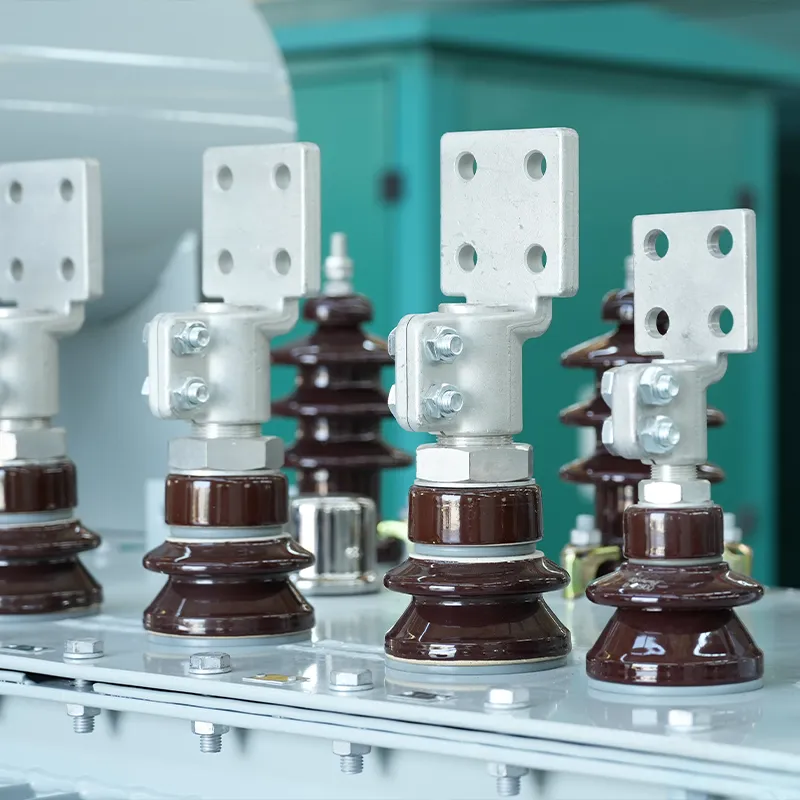
Appearance inspection: Check whether the box of the box type transformer is deformed, damaged, leaking oil, etc; Check whether there are cracks, damages, discharge marks, etc. on the high and low voltage bushings; Check if the radiator is blocked, deformed, etc.
Electrical testing:
Measure the DC resistance of the winding to determine if there are any faults such as short circuits or open circuits in the winding. If the imbalance of three-phase DC resistance exceeds the standard specification (generally not exceeding 2% -4%), there may be a winding fault.
Measure the insulation resistance of the winding, using an insulation resistance tester to measure the insulation resistance of the high-voltage winding to the low-voltage winding, the high-voltage winding to ground, and the low-voltage winding to ground. Generally speaking, for a 10kV transformer, the insulation resistance at room temperature should not be lower than 300M Ω. If the insulation resistance is too low, there may be problems such as insulation moisture and aging.
Conduct a transformation ratio test to check if the transformer’s transformation ratio meets the specifications on the nameplate. A large deviation in the transformation ratio may be due to an issue with the number of turns in the winding.
Measure the no-load current and no-load loss to determine if there is a fault in the iron core. If the no-load current and no-load loss are too high, it may be caused by insulation damage to the silicon steel sheet of the iron core, multiple grounding points of the iron core, and other reasons.
Common fault maintenance
Winding fault repair
Short circuit fault: If there is a short circuit in the winding, minor short circuits can be repaired locally, such as replacing the winding turns of the short circuited part; Severe short circuits may require rewinding of the winding. When rewinding the winding, it is necessary to strictly follow the parameters such as the number of turns, wire diameter, and winding direction of the original winding, and to do a good job in insulation treatment of the winding.
Open circuit fault: After finding the open circuit point, if it is disconnected at the joint, it can be re welded; If there is an internal wire break in the winding, it is necessary to replace the winding or perform local repairs.
Iron core fault repair
Multi point grounding of iron core: First, find the grounding point. Use a megohmmeter to ground the iron core and clamp separately, and measure their insulation resistance to determine the location of the grounding point. After finding the grounding point, handle it according to the specific situation, such as removing metal foreign objects on the surface of the iron core, repairing the insulation of the iron core, etc.
Overheating of iron core: Check whether there are problems such as short circuit ring breakage and insulation damage between silicon steel sheets in the iron core. If the short-circuit ring is broken, it needs to be replaced; If the insulation between silicon steel sheets is damaged, insulation paint can be applied for coating treatment.
Insulation fault repair
Insulation moisture: Drying methods can be used, such as drying in an oven or using hot oil circulation drying method. During the drying process, attention should be paid to controlling the temperature and time to avoid damaging the insulation of the transformer due to excessive temperature.
Insulation aging: If the insulation is severely aging, it is necessary to replace the insulation material, such as replacing the insulation paper and insulation sleeve of the winding.
Repair of tap changer malfunction
Poor contact: Poor contact of the tap changer can cause heating, sparks, and other phenomena. You can open the tap changer and check if there is any erosion or oxidation on the contact surface. Use sandpaper to polish the contact surface to ensure good contact; If the contact is severely eroded, the contact needs to be replaced.
Mechanical failure: If the operating mechanism of the tap changer is stuck or damaged, it needs to be repaired or replaced.
Testing and acceptance after repair
Electrical testing: After the maintenance is completed, a comprehensive electrical test should be conducted on the transformer, including tests on DC resistance, insulation resistance, transformation ratio, no-load current, and no-load loss, to ensure that all indicators meet the requirements.
Trial operation: Conduct a trial operation under no-load conditions, observe the operation status of the transformer, and check for any abnormal sounds, heating, or other phenomena. After a trial run for a period of time (usually 24 hours), operate with load and gradually increase the load, observing the operation of the transformer under different loads.
Acceptance: The repaired transformer must undergo acceptance by relevant departments or personnel, and can only be put into formal operation after passing the acceptance. The acceptance criteria include the completeness of maintenance records, accuracy of electrical testing data, and the operational status of transformers.
We will reply you within 24 hours. If for urgent case, please add WhatsApp/WeChat: +86 ******,. Or call +86 ****** directly.
*We respect your confidentiality and all information are protected.
We will only use your information to respond to your inquiry and will never send unsolicited emails or promotional messages.
